
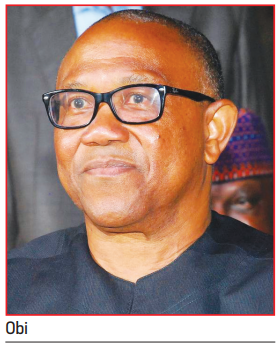
The Peter Obi Media Reach (POMR) has dismissed claims by supporters of President Bola Ahmed Tinubu that the presidential candidate of the Nigeria Democratic Congress (NDC), Mr. Peter Obi, is overhyped and enjoying exaggerated public support.
In a statement issued on Sunday by Idris Zekeri Jnr, spokesperson of the the media office outlined what it described as ten key achievements that demonstrate Obi’s preparedness for the presidency, while also highlighting ten areas in which it said the Tinubu administration has fallen short of Nigerians’ expectations.
The media office argued that Obi’s eight-year tenure as governor of Anambra State provided a verifiable record of leadership, fiscal discipline and development-focused governance that distinguishes him from many political contenders.
According to the statement, Obi successfully managed Anambra State between 2006 and 2014, leaving behind a legacy of prudent financial management, substantial savings and investments, as well as low debt levels.
It noted that his administration accumulated significant reserves, including investments reportedly worth about $500 million and dollar-denominated bonds valued at approximately $156 million.
The office further stated that Obi demonstrated that governments could save public resources rather than merely spend them, while making education a major pillar of development.
It recalled that his administration returned mission schools to their original owners and partnered with them to improve educational outcomes, adding that Anambra rose from 24th position to first place in WAEC and NECO performance rankings for three consecutive years during his tenure.
The statement also credited Obi with investing heavily in human capital development through education, healthcare and poverty-reduction initiatives.
According to POMO, the former governor improved healthcare delivery by supporting health institutions and accreditation programmes, while also attracting partnerships with international development agencies, including the World Bank, United Nations Development Programme (UNDP), Department for International Development (DFID) and the European Union.
The media office further highlighted Obi’s use of data-driven governance, including poverty mapping, aerial mapping and the development of the Anambra Integrated Development Strategy (ANIDS).
It added that Obi’s experience in business and banking before entering politics gave him a unique blend of private-sector expertise and public-sector leadership experience.
“The strongest argument for Peter Obi is that Nigerians do not have to rely on campaign promises alone. They can examine his record in office and judge how he managed resources, built institutions and invested in people,” the statement said.
The organisation maintained that Obi was not seeking the presidency to learn governance, but rather to apply lessons gained from his experience as governor and businessman to national leadership.
On the Tinubu administration, however, the media office painted a bleak picture, alleging that the government had failed to improve the welfare of Nigerians despite implementing major economic reforms.
Among the concerns raised were the rising cost of living, high inflation, declining purchasing power, naira depreciation and soaring fuel prices following the removal of fuel subsidy.
The statement also cited increasing poverty, unemployment and insecurity, arguing that many Nigerians were yet to feel the benefits of the administration’s policies.
It further accused the government of failing to sufficiently address concerns over transparency and accountability, while alleging that governance had become more politically driven than institution-focused.
According to the media office, the gap between government promises and the lived experiences of ordinary Nigerians remains wide.
“The fundamental question is not whether Tinubu inherited a difficult Nigeria. He did. The question is whether, after taking difficult decisions, Nigerians are better off today and whether the government has convincingly demonstrated that today’s sacrifice is producing tomorrow’s prosperity,” the statement said.
POMO insisted that the answer to that question, from the perspective of many Nigerians, remains negative.