
…Says 400 security motions, Cybercrimes Act, electoral act reforms driving change
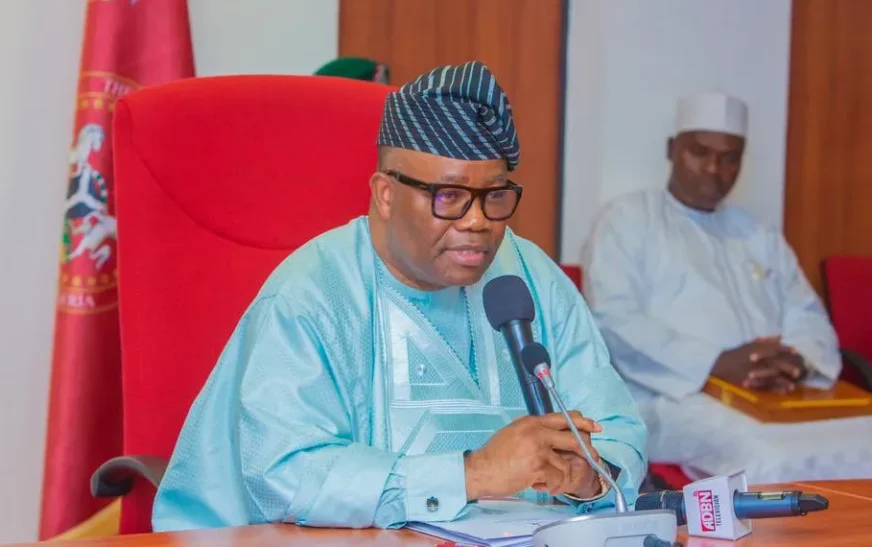
The Deputy Speaker of the House of Representatives, Rt. Hon. Benjamin Kalu has said the 10th National Assembly has deployed funding, oversight, and constitutional reform to confront Nigeria’s security crisis.
According to a statement from his Media office in Abuja on Wednesday, Kalu spoke at the Chatham House Africa Programme Roundtable in London on “Nigeria’s 2027 Elections: How to Ensure Electoral Integrity Amid a Deepening Security Crisis.”
He said security has been the National Assembly’s top priority since the 10th Assembly began in June 2023.
Through appropriation, he revealed, security and defence allocations rose from ₦2.98 trillion to ₦5.41 trillion in the 2026 budget. That represents an 81% increase in three years and makes security the single largest sectoral allocation for three consecutive years.
The Deputy Speaker said the House is also pushing a constitutional amendment to make security funding a “first-line charge” on the national budget.
“The move, he explained, would guarantee release before other budget lines and remove it from discretionary timing.
“Protection of citizens is not a budget item that should compete for space,” Kalu stated.
On oversight, he said House committees have partnered with the executive and security agencies to track spending and execution. The goal, he noted, is to close gaps between planning and implementation.
Under its representative mandate, Kalu added that the House considered over 1,500 substantive motions between June 2023 and June 2026. About 400 of those motions focused on security, banditry, kidnapping, attacks on farming communities, and protection of vulnerable populations.
Those resolutions, he said, produced concrete actions. They led to the summoning of security chiefs, mandated the recruitment of forest guards, secured commitments to protect schools in high-risk areas, and pushed for permanent security outposts in exposed communities.
The Deputy Speaker told policymakers, diplomats, and scholars that the National Assembly has passed the revised Cybercrimes Act 2024 and the Control of Small Arms and Light Weapons Act 2024. He added that the Joint Doctrine and Warfare Centre Bill is being advanced for better coordination among the armed forces.
Kalu described the State Police Bill as President Bola Tinubu’s “legacy initiative.”
He said the House passed it recently with 289 votes, and the Senate is now considering it.
He argued that Nigeria’s centralised police, designed before independence, cannot respond fast enough for a 923,000 sq km nation of over 230 million people.
“Studies show response times beyond 15 minutes allow situations to escalate from manageable to irreversible. In communities distant from federal police infrastructure, that window closes long before help arrives,” Kalu said.
“State police address this directly. The officer who comes from a community knows its roads, its markets, its people, its tensions. The officer who knows the forest will police the forest better than those hired from outside,” he added.
The Deputy Speaker allayed fears of abuse, saying the bill contains guardrails. These include merit-based recruitment, national minimum standards, independent state police service commissions, state assembly oversight, and strict constitutional limits on political interference.
“The concern about governors weaponising state police is legitimate, and we have legislated against it. What is not legitimate is allowing that concern to perpetuate a policing model that is visibly failing the communities it exists to protect,” he stated.
Beyond security, Kalu said President Tinubu signed the Electoral Act 2026 on 18 February 2026. The Act carries 15 reforms to close gaps in the 2022 law.
He highlighted five key reforms: electronic transmission of results to IReV as a legal obligation admissible in tribunals, with 10 years imprisonment for officers who announce false results; INEC’s power to review declarations made under duress within seven days; a permanent National Electronic Register of Election Results accessible to citizens; voter registration open until 90 days before elections with transfers and downloadable PVCs; and parties submitting verified digital membership registers 21 days before primaries to abolish indirect primaries.
Kalu concluded that Nigeria’s democracy is still young but making steady progress, “What I have shared today is not a finished story. It is a progress report from a legislature that is working, that is learning, and that believes deeply that the democratic project in Nigeria is worth every difficult reform it demands.”

![Nollywood actor CJay Nwoks dies in Lagos hospital [VIDEO]](https://publicdesknews.com/wp-content/uploads/2026/09/CJay-Nwoks.jpg)